
Why Do Concrete and Cement Plants Need Industrial Wheel Wash Systems?
August 15, 2026
Why Are Industrial Wheel Wash Systems Important for Data Center Construction?
August 29, 2026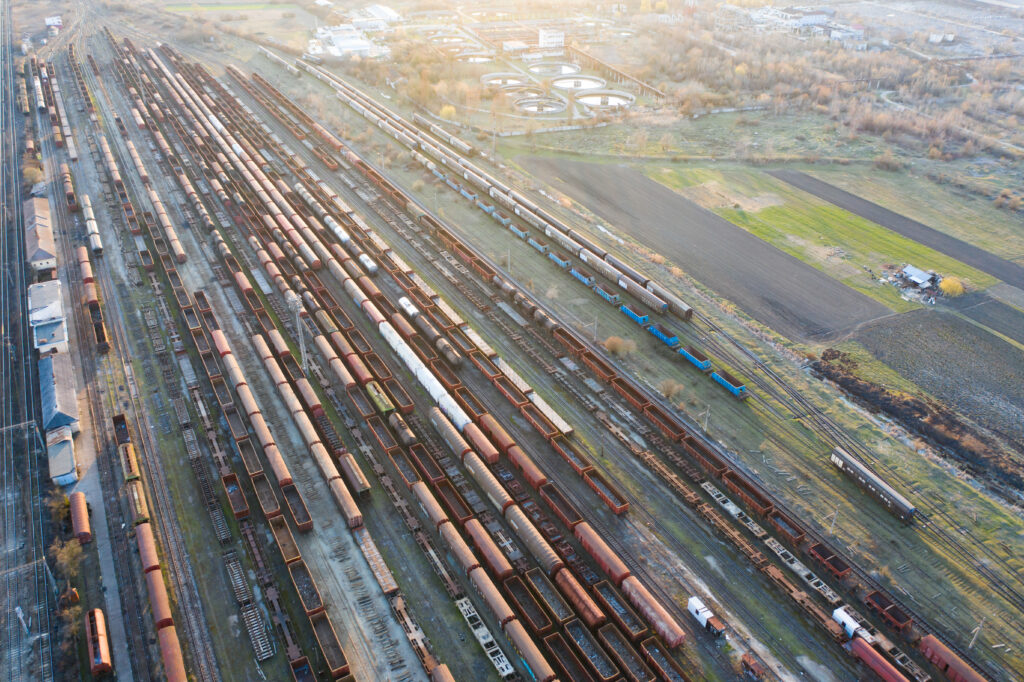
How Can Industrial Wheel Wash Systems Benefit Rail Yards and Intermodal Terminals?
Rail yards and intermodal terminals move large volumes of freight between trains, trucks, storage areas, and nearby highways. When these facilities handle bulk materials or include unpaved traffic routes, trucks can carry mud, sediment, and debris beyond the property.
An industrial wheel wash system helps clean vehicles before they enter public roads or other controlled areas of the terminal.
Why Is Track-Out a Concern at Transportation Facilities?
Trucks may travel across gravel lots, temporary roads, loading zones, and areas exposed to rain. Dirt can become packed into tire treads, while loose material may collect between dual wheels or along the undercarriage.
As vehicles leave the facility, this material can fall onto access roads. Wet sediment may make pavement slippery, and dried material can become airborne dust. Track-out may also enter drainage systems during rainfall.
A terminal with continuous truck traffic can develop a visible problem quickly if each vehicle carries even a small amount of material.
How Does an Industrial Wheel Wash Work?
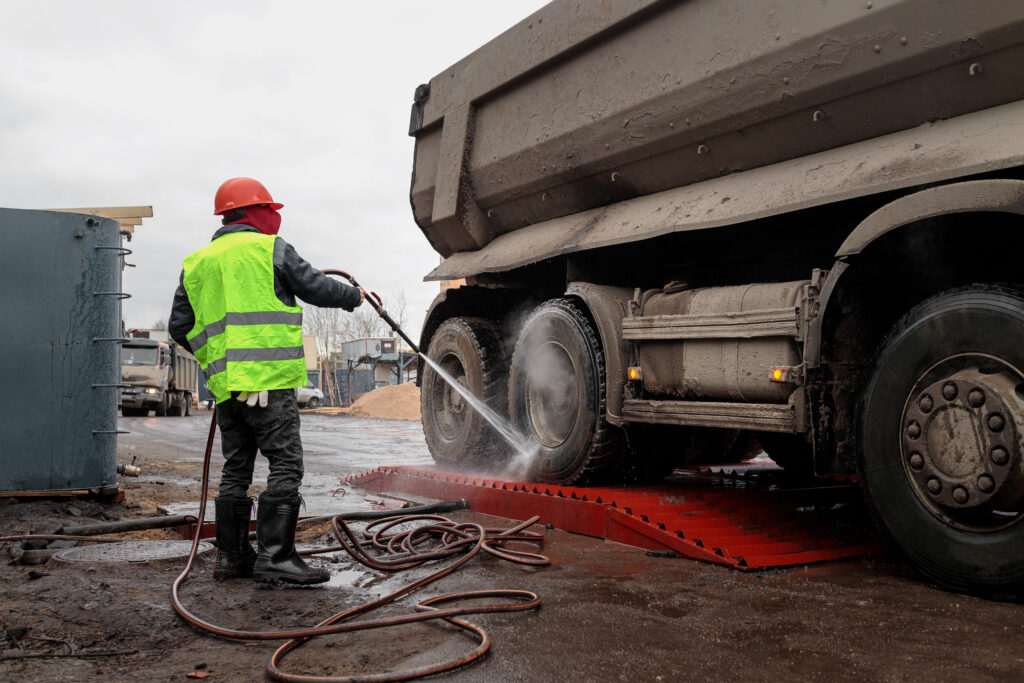
An industrial wheel wash uses strategically positioned water jets to remove material from tires, wheels, and undercarriages. The truck moves across a durable platform while its rotating tires receive a consistent wash.
Neptune’s automated wheel wash systems use sensors to activate the cleaning cycle. Drivers do not need to wait for workers to position hoses or manually clean each vehicle.
Different platform lengths can provide one, two, or three tire revolutions, depending on the facility’s soil conditions and cleaning requirements.
Can a Wheel Wash Handle High Truck Volumes?
Yes, provided the system is properly sized. A busy intermodal terminal should evaluate its average traffic, peak arrival periods, vehicle sizes, and loading schedules before selecting equipment.
The wash platform must be paired with a tank and solids-removal system capable of supporting the expected number of wash cycles. If any part of the system is undersized, sediment may build up too quickly or trucks may experience unnecessary delays.
The approach and exit lanes should also provide enough room for queuing without interfering with rail, loading, or yard traffic.
How Does Wheel Washing Relate to Stormwater Management?
Transportation facilities may be subject to industrial stormwater requirements depending on their activities, location, and permit coverage. The EPA’s Sector P stormwater guidance addresses rail transportation facilities and other freight-related operations.
A wheel wash can support a site’s stormwater strategy by capturing material before it is deposited on roads and exposed to rainfall. Wash water should be directed into a collection, settling, or recycling system rather than allowed to enter storm drains.
Facility operators should review applicable permits and work with the appropriate regulatory agencies.
Can Wash Water Be Recycled?
Modern systems can collect used water, separate solid material, and return the recovered water to the wash platform. This closed-loop process helps reduce fresh-water consumption while keeping sediment within a controlled area.
Regular tank cleaning remains important. High-volume terminals may need automated or mechanical solids removal to reduce labor and maintain adequate settling capacity.
Pumps, spray nozzles, sensors, ramps, and drainage areas should also be included in routine inspections.
Where Should the Wheel Wash Be Located?
The system should be installed along the required truck exit route, with enough space for safe approaches and turns. It should not create conflicts between trucks, rail equipment, containers, or workers.
OSHA’s guidance on work safety zones for on-dock rail operations highlights the importance of organized work areas around intermodal activities. A wheel wash should fit within the facility’s broader traffic and worker-safety plan.
Neptune’s guide to choosing a system can help match wash equipment to the material carried by vehicle tires.
How Can Innovative Equipment Solutions Help?
Innovative Equipment Solutions can evaluate truck volume, soil conditions, vehicle dimensions, water access, drainage, and available installation space.
A correctly designed industrial wheel wash can help a rail yard or intermodal terminal reduce roadway track-out, manage sediment, conserve water, and maintain efficient freight movement. Cleaner truck exits also support a more professional facility and better relationships with surrounding communities.