
How Can Industrial Wheel Wash Systems Benefit Rail Yards and Intermodal Terminals?
August 22, 2026
How Do Industrial Wheel Wash Systems Support Underground Construction Projects?
September 5, 2026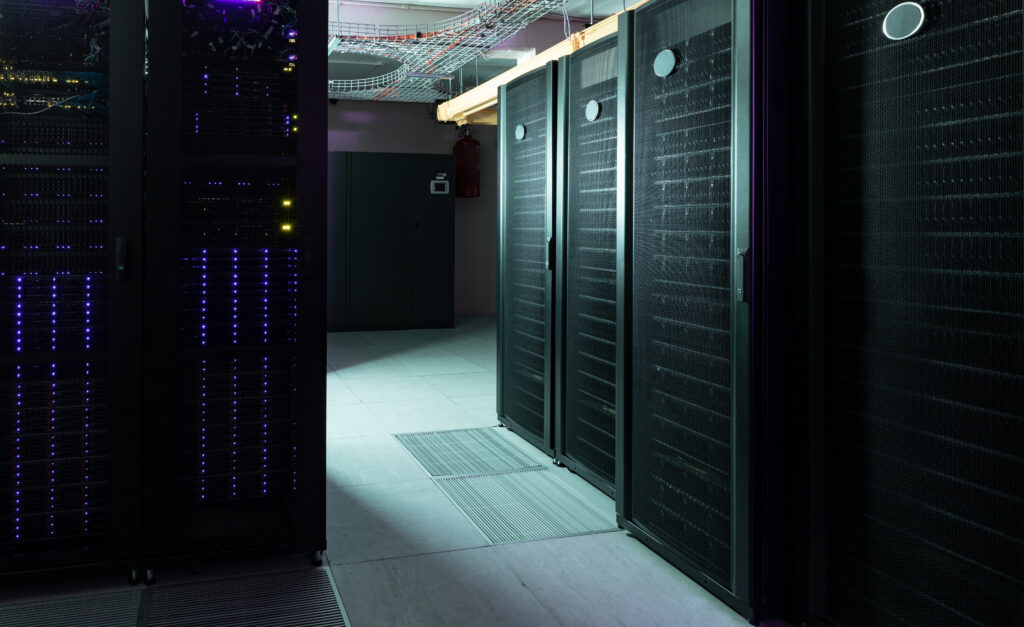
Why Are Industrial Wheel Wash Systems Important for Data Center Construction?
Data center construction projects require extensive earthwork, utility installation, concrete placement, and material deliveries. During peak construction, hundreds of trucks and heavy vehicles may enter and exit the site each day.
An industrial wheel wash system helps prevent those vehicles from carrying mud, sediment, and debris onto surrounding roads.
Why Do Data Center Projects Create Track-Out?
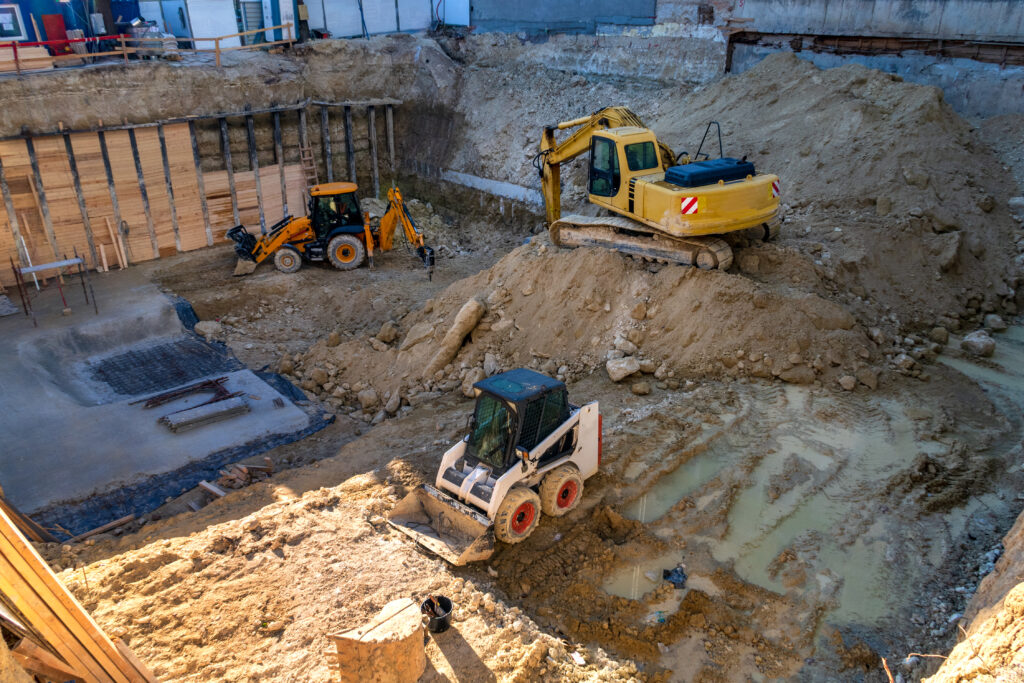
Data centers are often built on large sites that must be cleared and graded before vertical construction begins. Crews may excavate foundations, install underground utilities, construct access roads, and prepare areas for electrical infrastructure.
Dump trucks, concrete vehicles, loaders, and delivery trucks repeatedly travel across exposed soil. Mud can become packed into tire treads and trapped between dual wheels, particularly after rainfall.
When those vehicles enter public roads, the material may create slippery pavement, airborne dust, clogged drainage systems, and additional cleanup work.
How Does an Industrial Wheel Wash Work?
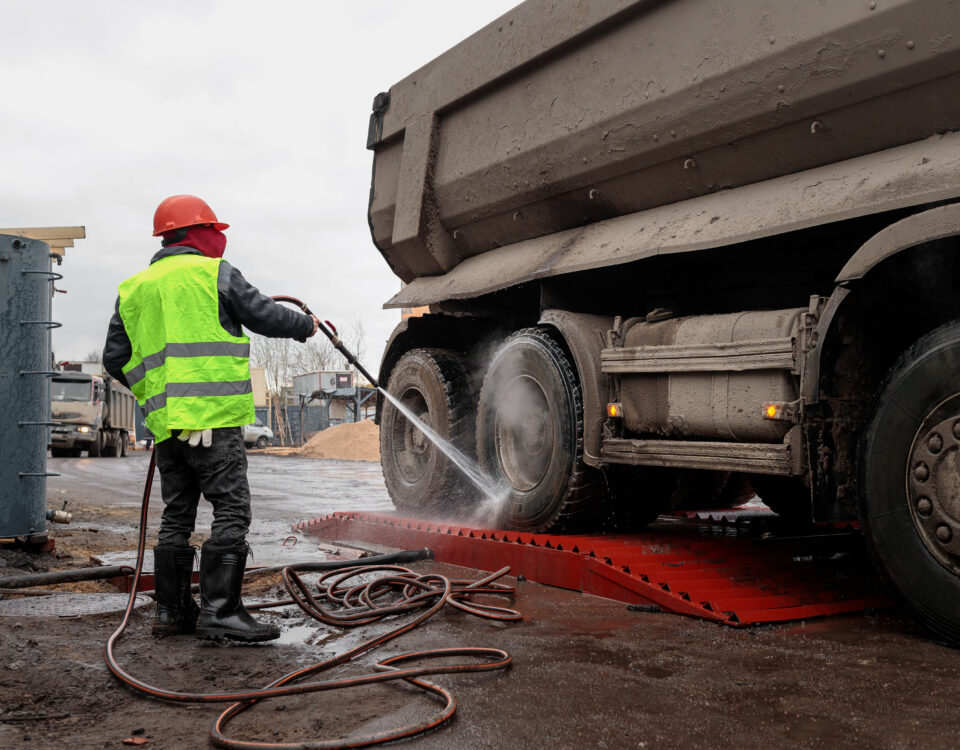
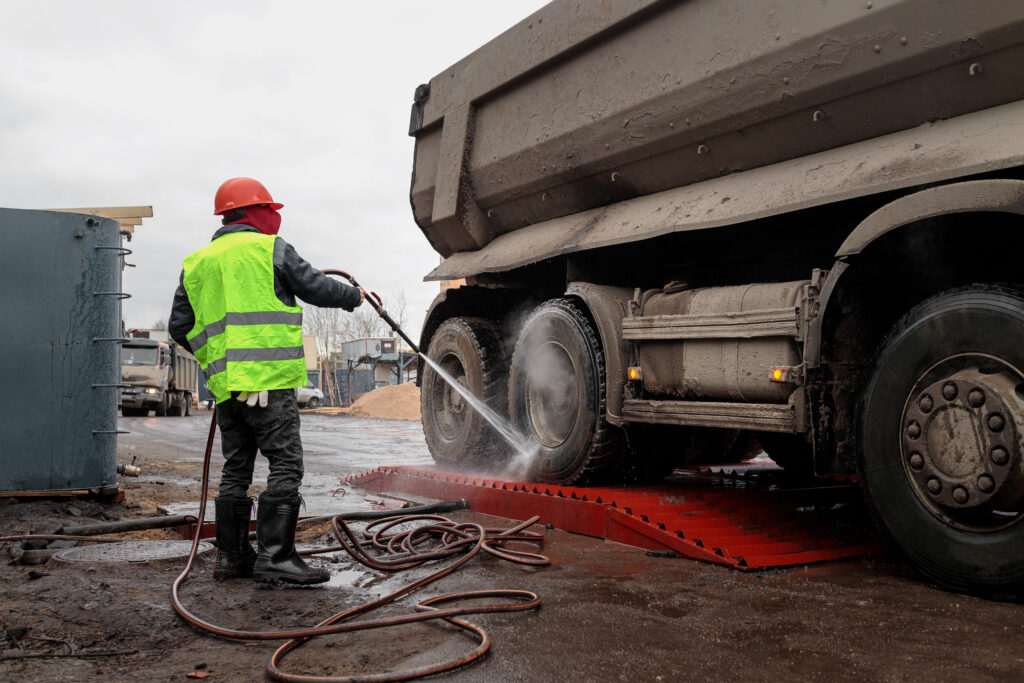
An industrial wheel wash uses high-volume water to remove material from tires, wheel wells, and vehicle undercarriages. Trucks drive across a platform equipped with strategically positioned spray nozzles.
Neptune’s automated wheel wash systems use sensors to begin the cleaning cycle as a vehicle approaches. Drivers can move through the system without waiting for workers to wash each truck manually.
This automated process provides more consistent cleaning while helping maintain the pace of a busy construction schedule.
Can a Wheel Wash Keep Up With Data Center Traffic?
Yes, but the system must be properly sized. Contractors should consider the average number of vehicles, peak delivery hours, truck dimensions, soil conditions, and amount of material carried by each vehicle.
A high-capacity project may require a longer platform, larger recycling tank, and dependable solids-removal equipment. Neptune provides additional guidance on how wheel wash systems support high-traffic sites.
The approach lane should also provide enough space for trucks to queue without blocking deliveries or creating conflicts with other equipment.
How Can Wheel Washing Support Stormwater Management?
Mud deposited on surrounding roads may wash into storm drains during rainfall. Sediment can then be transported toward streams, lakes, and other waterways.
The EPA identifies vehicle wash stations as one option for controlling construction track-out. Wash water should be directed into a sediment trap, settling tank, or treatment system rather than allowed to flow onto roads or into storm drains.
A wheel wash should complement stabilized entrances, erosion controls, drainage planning, inspections, and other measures included in the project’s stormwater plan.
Can the System Recycle Wash Water?
Many industrial wheel wash systems use a closed-loop process. Dirty water is collected, solids are separated, and recovered water is returned to the platform for reuse.
Water recycling can be particularly valuable for large data center projects because it reduces the amount of fresh water needed for daily vehicle cleaning. The tank and separation system must be sized for expected traffic and sediment volume.
Regular maintenance includes removing accumulated solids and inspecting pumps, nozzles, sensors, ramps, and drainage areas.
Where Should the Wheel Wash Be Installed?
The system should be positioned along the primary exit route so required vehicles cannot bypass it. Cleaned trucks should then travel across a stabilized area before reaching the public road.
Traffic signs, barriers, and clearly marked routes can help drivers move safely through the wash. OSHA’s work-zone traffic guidance emphasizes using visible traffic controls to direct vehicles away from workers and active construction areas.
How Can Innovative Equipment Solutions Help?
Innovative Equipment Solutions can evaluate vehicle volume, soil conditions, project duration, installation space, drainage, and water availability.
A properly designed industrial wheel wash can help data center contractors reduce track-out, control sediment, minimize roadway cleanup, and keep deliveries moving. For projects built around reliability and advanced infrastructure, dependable wheel-washing equipment is a practical investment in cleaner and more efficient construction.