
Why Are Industrial Wheel Wash Systems Valuable for Airport Construction?
August 8, 2026
How Can Industrial Wheel Wash Systems Benefit Rail Yards and Intermodal Terminals?
August 22, 2026
Why Do Concrete and Cement Plants Need Industrial Wheel Wash Systems?
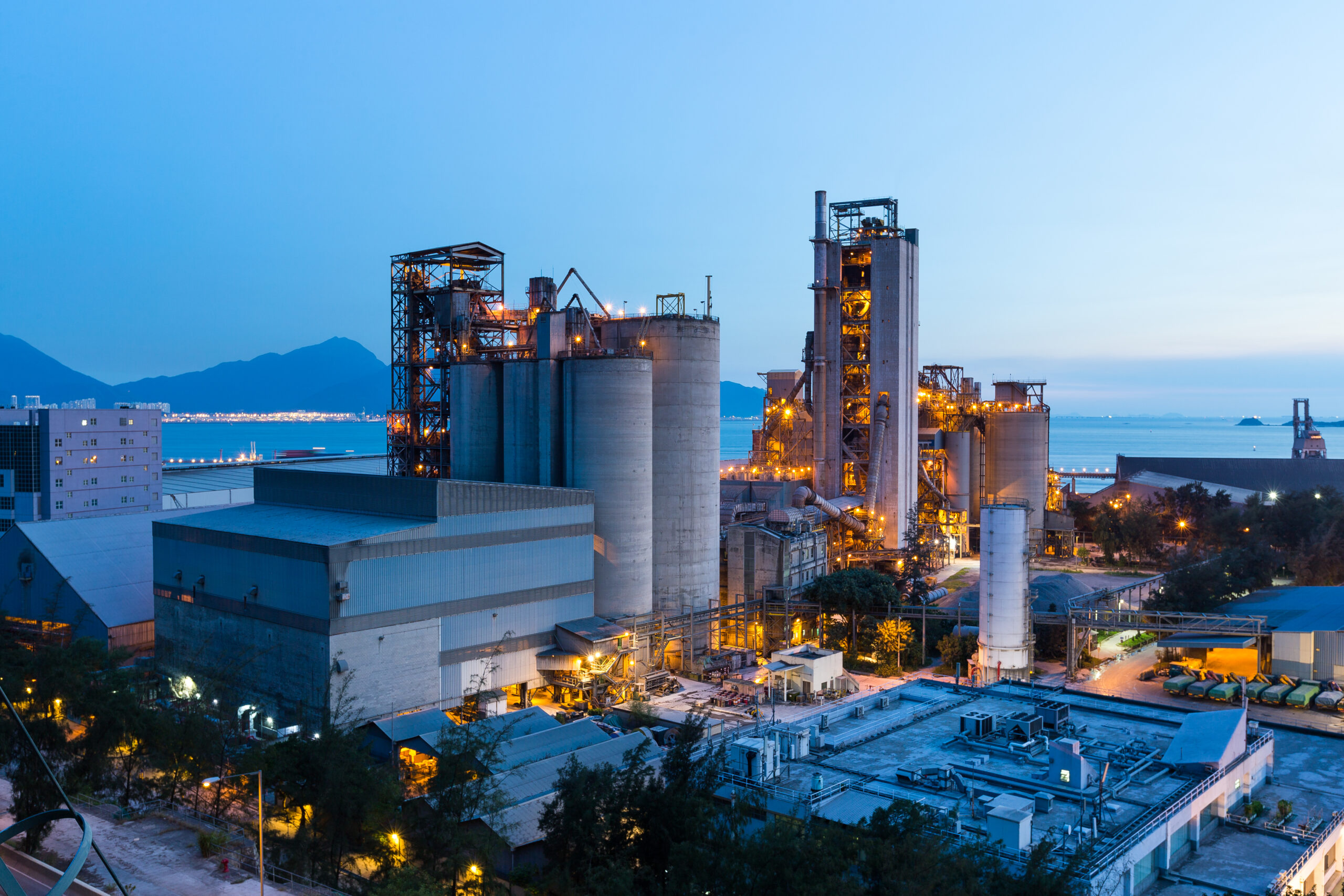
Concrete batch plants, cement facilities, and related manufacturing operations handle large amounts of aggregate, sand, powder, and wet material. Trucks moving through these facilities can collect that material on their tires and undercarriages.
Industrial wheel wash systems provide a consistent way to clean vehicles before they enter public roads, helping facilities control track-out and maintain cleaner operating areas.
What Types of Material Can Trucks Carry Off-Site?
Vehicles traveling through a concrete or cement facility may encounter fine cement dust, sand, gravel, mud, and spilled raw materials. These substances can become packed into tire treads or trapped between dual wheels.
Wet material may stick to tires and fall onto the roadway in clumps. Fine material can dry, break apart, and become airborne as other vehicles pass over it. Loose aggregate can also scatter across paved surfaces.
The amount of track-out often increases during wet weather, periods of heavy production, or construction around the facility.
How Does an Industrial Wheel Wash Work?
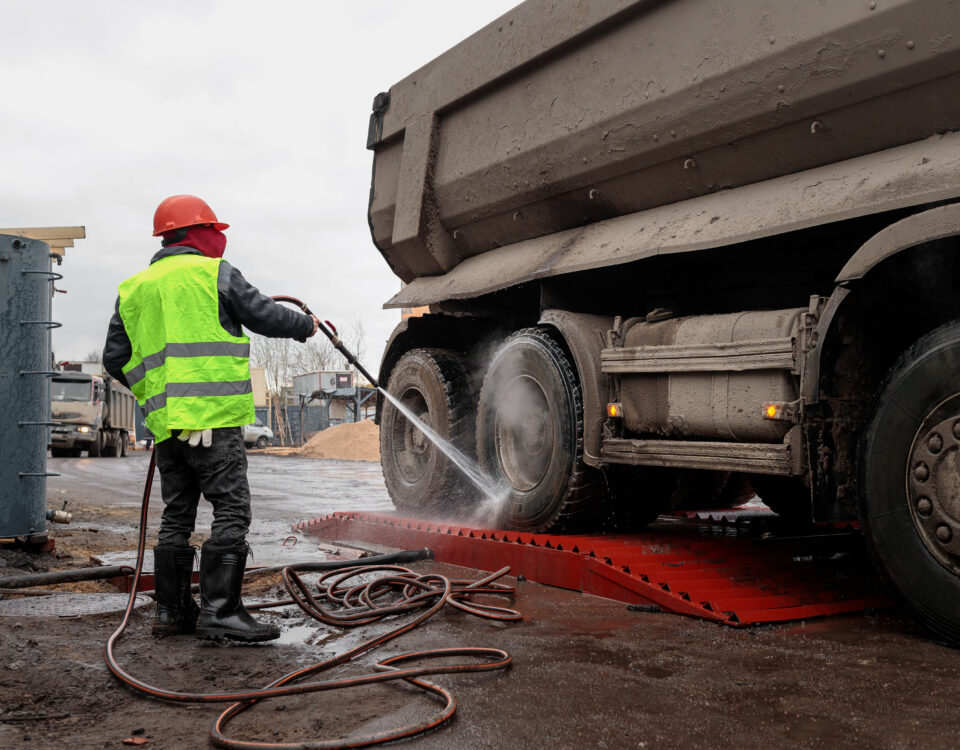
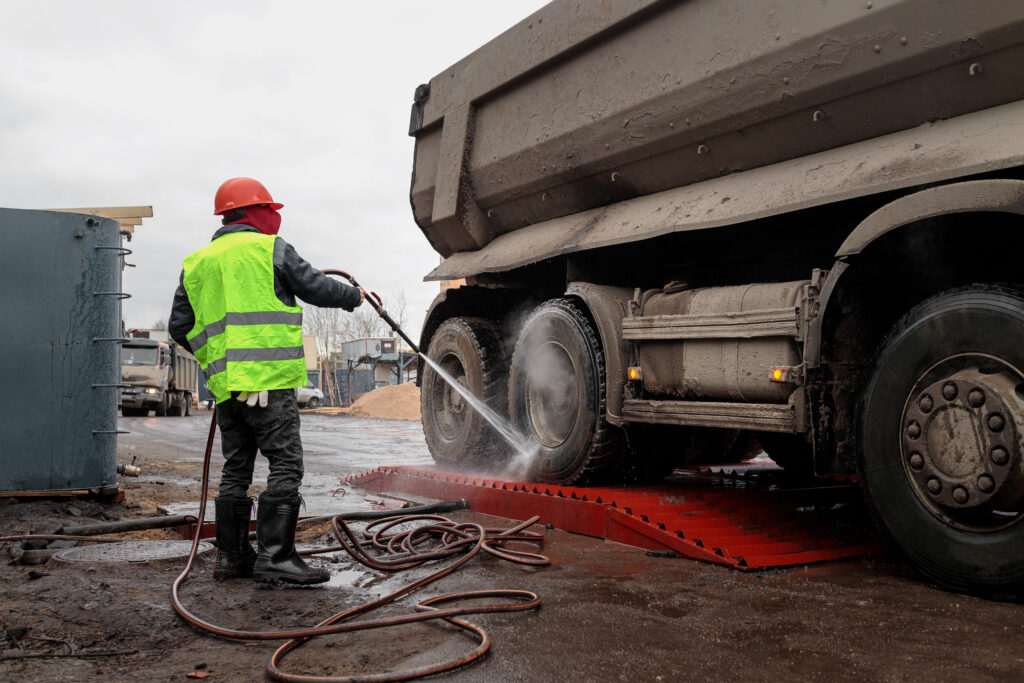
An industrial wheel wash directs high volumes of water toward vehicle tires, wheel wells, and undercarriages. As each truck moves across the wash platform, rotating tires expose additional surfaces to the spray.
Neptune’s automated wheel wash systems use sensors to activate the cleaning cycle. This provides a repeatable process without requiring an employee to wash every truck manually.
Systems can be configured with different platform lengths to provide the number of tire revolutions required for the facility’s conditions.
Can a Wheel Wash Help Reduce Roadway Dust?
Yes. Fine material deposited on pavement may become airborne when it dries and is disturbed by traffic or wind. Removing dust and sediment from truck tires before vehicles leave can reduce the amount available to accumulate on surrounding roads.
A wheel wash should be part of a broader housekeeping plan that may include spill cleanup, covered material storage, stabilized traffic routes, drainage management, and street sweeping when necessary.
Cleaning the vehicle at the exit addresses track-out before it spreads beyond the facility.
How Does Wheel Washing Support Stormwater Management?
Rainwater can carry exposed industrial material toward drainage systems and nearby waterways. Material tracked onto roads may also enter storm drains during a storm.
The EPA publishes industrial stormwater guidance for multiple sectors, including facilities that manufacture glass, clay, cement, concrete, and gypsum products. Requirements vary by facility and location, so operators should review their permits and consult the appropriate regulatory agencies.
Wheel wash water should be collected and managed within a controlled treatment or recycling system rather than discharged onto the road.
Can Wash Water Be Reused?
Modern wheel wash systems can collect dirty water and move it into a settling or separation tank. Solid material settles or is mechanically removed, allowing recovered water to return to the wash platform.
This closed-loop process can reduce the facility’s demand for fresh water. It also keeps removed sediment in a designated area where it can be managed appropriately.
The tank must be sized for the number of trucks, frequency of washing, and amount of material expected during each shift.
What Features Are Important for Concrete and Cement Facilities?
Durability, water-delivery efficiency, accessible maintenance points, and reliable solids handling are especially important in industrial environments. Fine sediment can accumulate quickly, so tanks, nozzles, pumps, and conveyors should be inspected regularly.
Neptune’s system strengths and features include high-volume, moderate-pressure washing, solid-handling pumps, adjustable nozzles, and configurations that can adapt to different site conditions.
The platform should accommodate the facility’s largest vehicle and be located along the required exit route.
How Can Innovative Equipment Solutions Help?
Innovative Equipment Solutions can evaluate vehicle sizes, daily traffic, materials, available space, water access, and installation requirements before recommending a system.
A properly designed industrial wheel wash can help a concrete or cement facility reduce track-out, simplify cleanup, conserve water, and present a cleaner entrance to customers and surrounding communities. By controlling material before trucks leave, facilities can support both efficient operations and responsible site management.