
Why Are Industrial Wheel Wash Systems Important for Demolition Sites?
July 23, 2026
Why Are Industrial Wheel Wash Systems Valuable for Airport Construction?
August 8, 2026
How Can Industrial Wheel Wash Systems Support Renewable-Energy Construction?
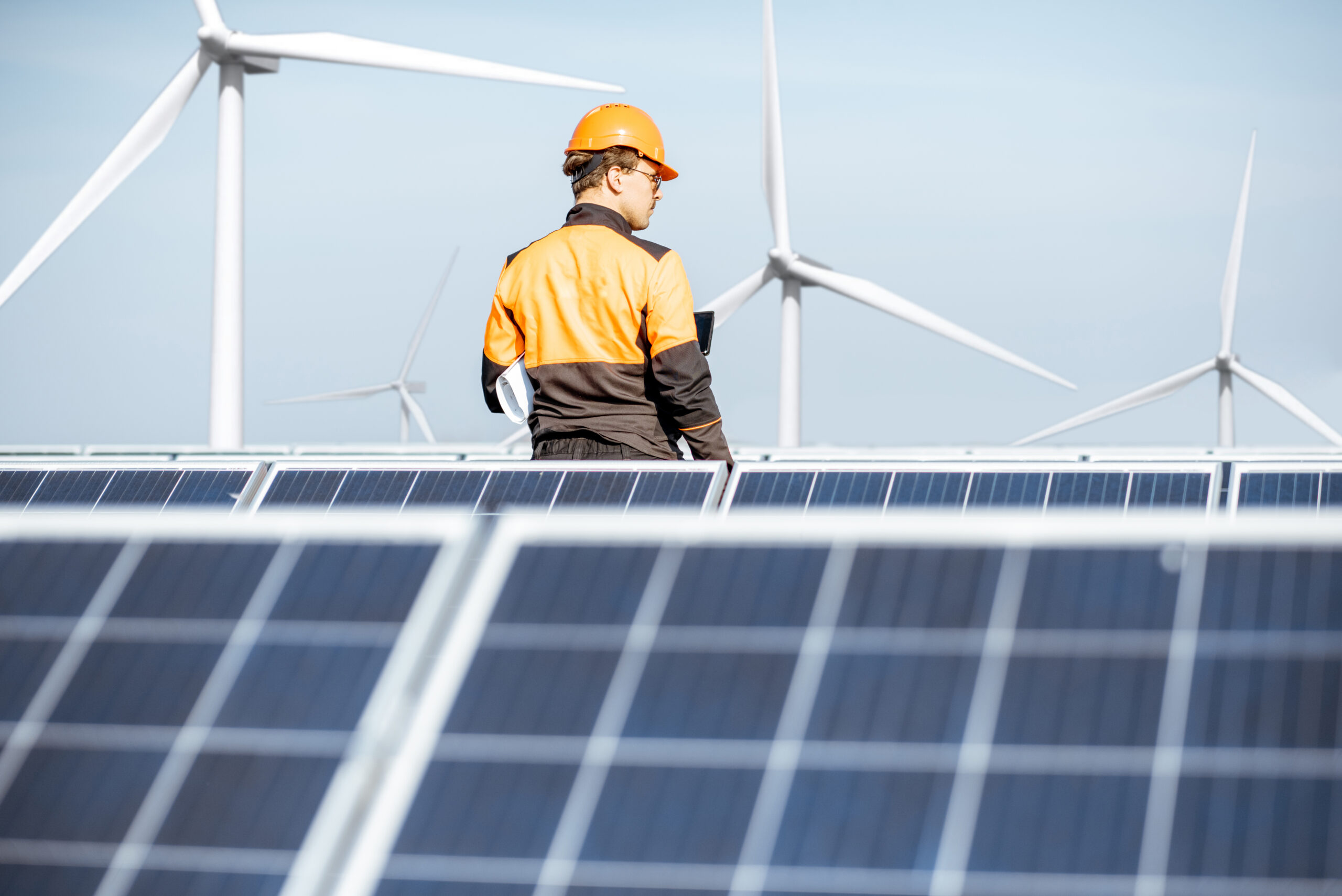
Solar farms, wind-energy developments, and battery-storage facilities are designed to support a cleaner energy future. However, constructing these projects still requires extensive earthmoving, material deliveries, and heavy-equipment traffic.
Industrial wheel wash systems help renewable-energy contractors manage mud and sediment so the construction process reflects the environmental goals of the finished project.
Why Do Renewable-Energy Projects Experience Track-Out?
Renewable-energy developments often cover large areas of previously undeveloped land. Crews may build temporary access roads, grade installation areas, excavate foundations, and create equipment staging zones.
Delivery trucks and construction vehicles then travel repeatedly across exposed soil. Mud, clay, and sediment can become packed into tires or trapped along undercarriages. When vehicles leave the project, that material may be carried onto rural highways and nearby community roads.
Changing weather can make the problem worse, particularly during rainy periods or early phases of site development.
How Does an Industrial Wheel Wash Address the Problem?
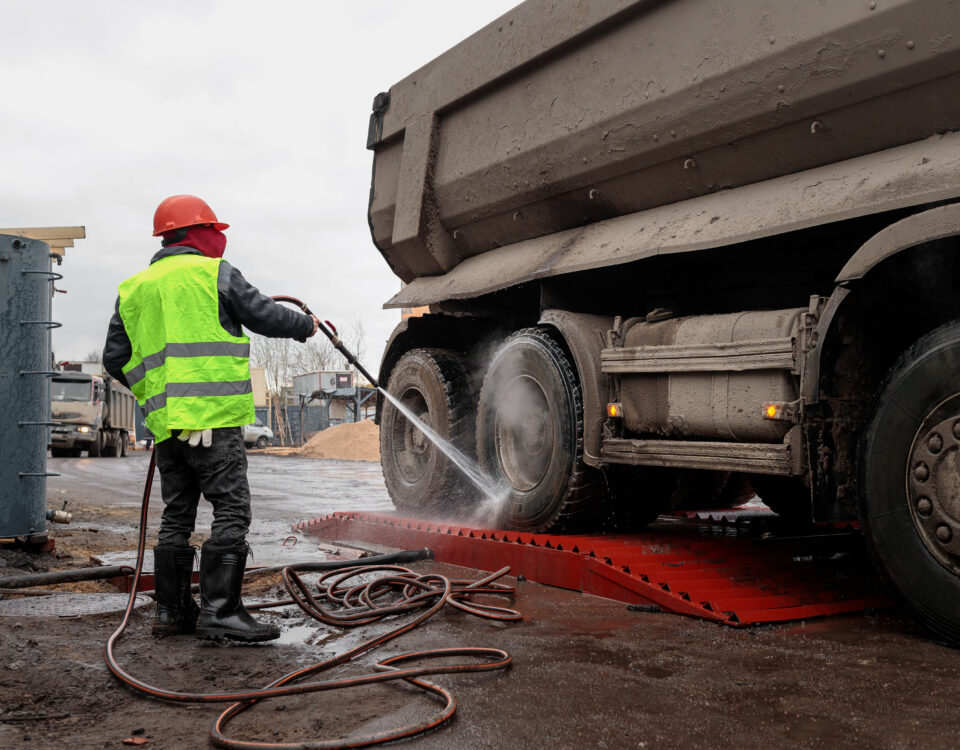
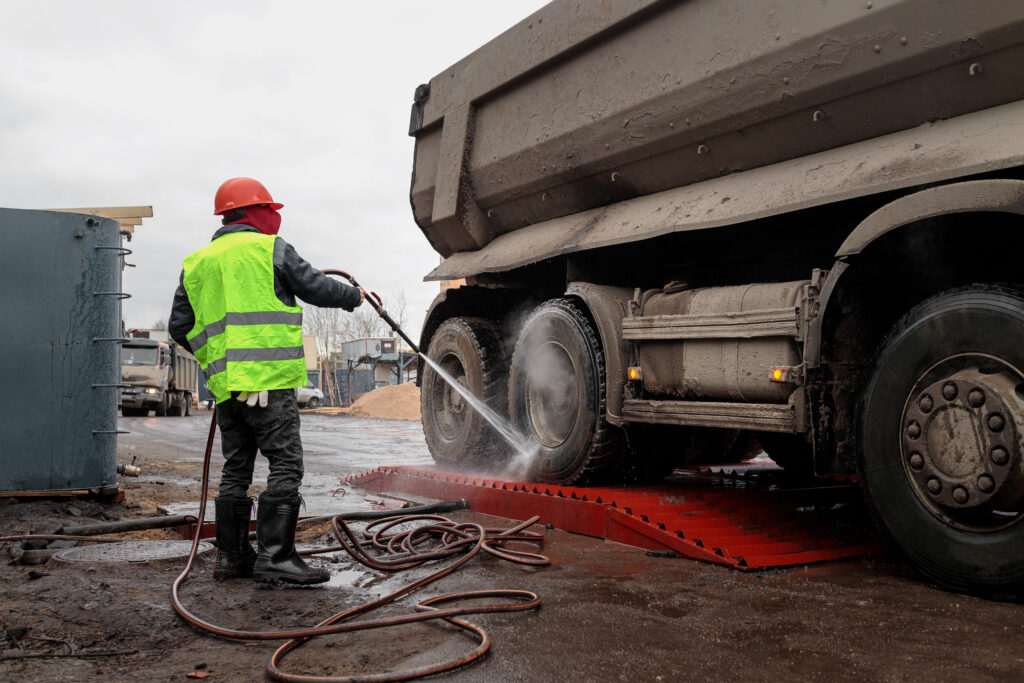
An industrial wheel wash cleans truck tires, wheel wells, and undercarriages before vehicles leave the controlled work area. High-volume water sprays loosen material while the truck travels across a specially designed platform.
Neptune’s automated wheel wash systems activate as vehicles enter the wash. This helps provide consistent cleaning without requiring workers to stop and manually hose down each truck.
Automation can be especially useful on large energy projects where vehicle traffic changes throughout the construction schedule.
Why Is Track-Out Control Important in Rural Communities?
Renewable-energy projects are frequently located near farms, homes, wetlands, or small communities. Mud deposited onto a two-lane road can affect residents, school buses, agricultural vehicles, and other motorists.
Visible track-out may also lead to complaints or concerns about how the project is being managed. Maintaining a clean exit demonstrates respect for the surrounding community and helps the contractor present a more professional image.
A wheel wash can reduce the need for repeated roadway cleanup by addressing the source of the problem before trucks leave.
Can Wheel Washing Help Protect Nearby Waterways?
Yes. Sediment deposited on roads can be carried by rainfall into ditches, storm drains, streams, or other nearby waters.
The EPA’s guidance on construction track-out controls identifies vehicle-washing stations as a method for removing sediment before it leaves a construction site. The guidance also recommends directing wash water into an appropriate sediment trap or treatment area.
Wheel washing should be combined with stabilized entrances, erosion controls, drainage planning, and other measures required by the project’s stormwater plan.
How Can a Wheel Wash Conserve Water?
Many modern systems capture used wash water and send it through a settling or separation process. Once solids are removed, the recovered water can be reused for additional wash cycles.
Closed-loop recycling can reduce the amount of fresh water required, which is particularly valuable on remote solar or wind projects where a dependable water supply may not be immediately available.
The recycling tank must be properly sized for the anticipated vehicle volume and amount of sediment entering the system.
What Type of System Works Best for a Temporary Energy Project?
The answer depends on project length, soil type, vehicle size, daily traffic, installation space, and site access. A temporary or relocatable system may be appropriate when the wash is needed primarily during grading and construction.
Neptune’s guide to choosing a wheel wash system compares options for conditions ranging from light dust and sand to sticky soil that fills tire treads and dual-wheel gaps.
The system should be positioned along the primary exit route with enough stabilized space between the platform and public road.
How Can Innovative Equipment Solutions Help?
Innovative Equipment Solutions can assess the project’s traffic patterns, equipment, soil conditions, water access, and construction schedule before recommending a configuration.
An appropriately designed industrial wheel wash system supports cleaner roads, better sediment control, efficient water use, and stronger community relationships. For renewable-energy contractors, it is a practical way to carry environmental responsibility through every phase of construction.