
How Can Industrial Wheel Wash Systems Support Renewable-Energy Construction?
August 1, 2026
Why Do Concrete and Cement Plants Need Industrial Wheel Wash Systems?
August 15, 2026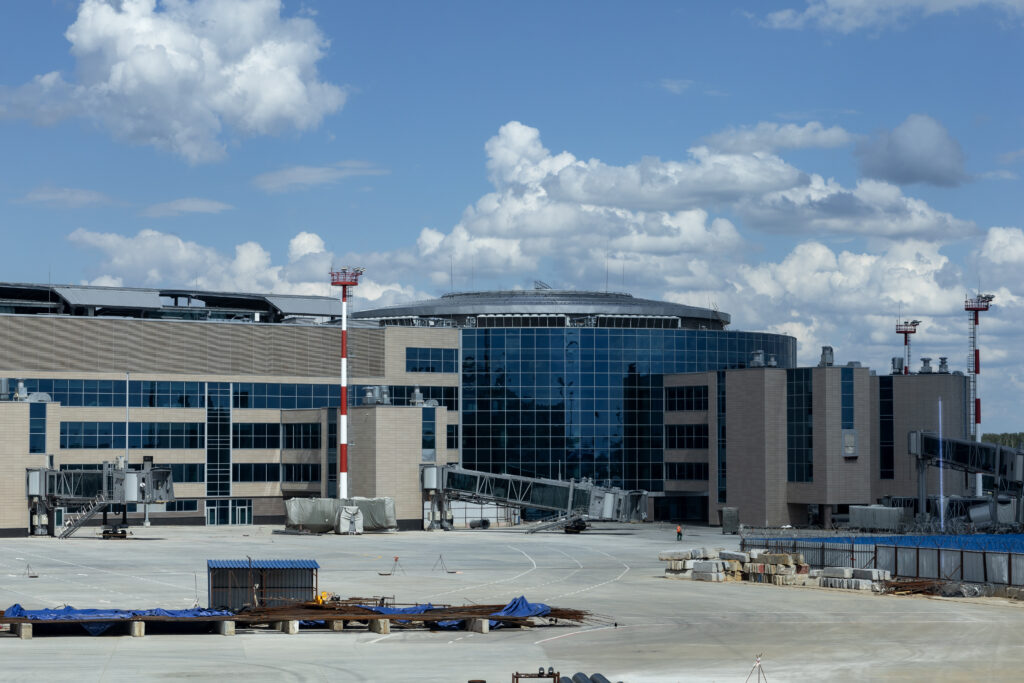
Why Are Industrial Wheel Wash Systems Valuable for Airport Construction?
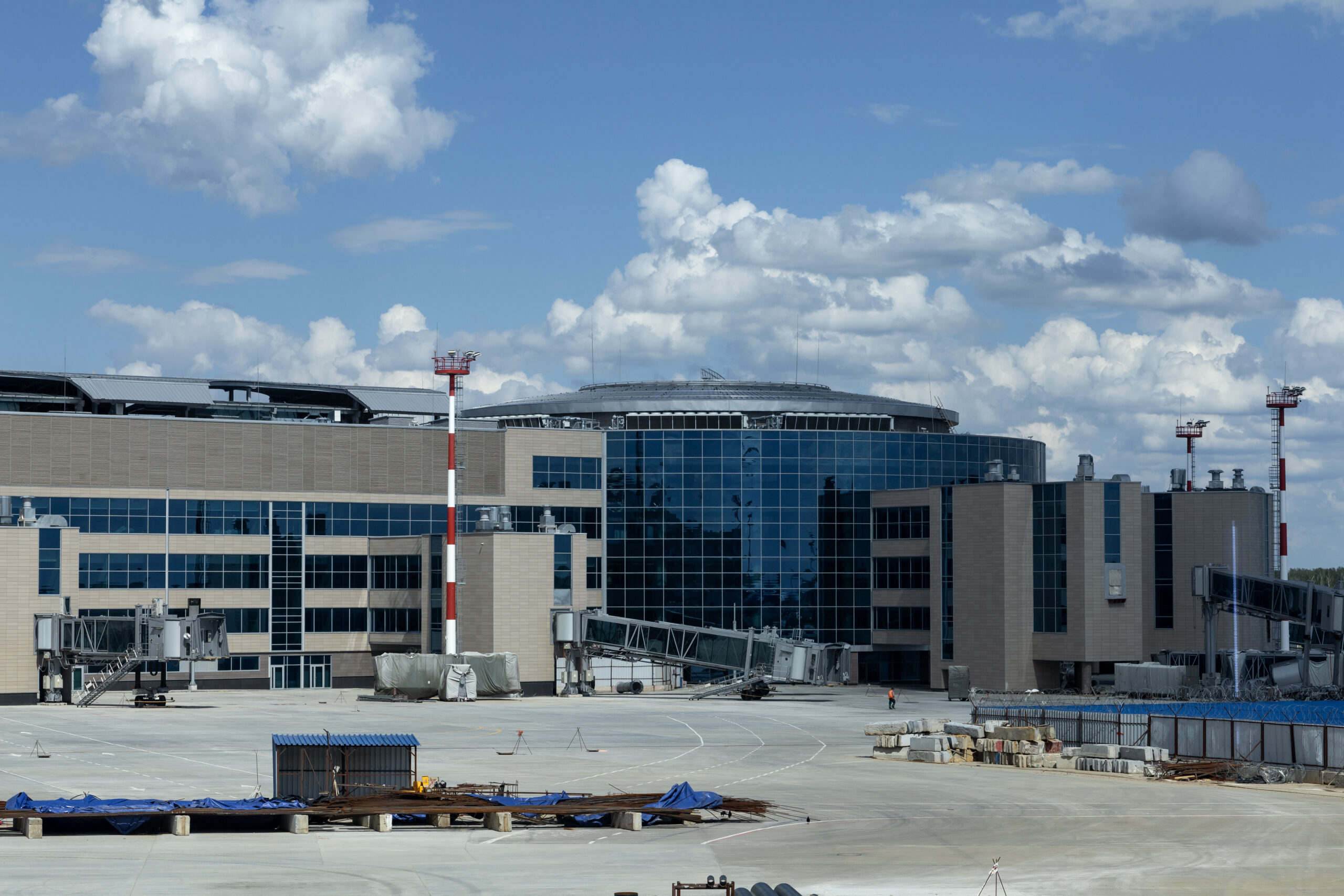
Airport construction projects involve many of the same challenges as other large job sites, but they take place in a highly controlled environment. Trucks and heavy equipment may travel between muddy work zones, public roads, service areas, and locations near active aircraft operations.
An industrial wheel wash system can help control mud and debris before vehicles move beyond the designated construction area.
What Track-Out Problems Occur During Airport Construction?
Runway expansions, terminal projects, drainage improvements, utility work, and new hangar construction often require excavation and grading. Trucks moving through these areas can collect soil, aggregate, and construction debris in their tire treads and undercarriages.
Without an effective cleaning process, vehicles may deposit that material on access roads or paved airport surfaces. Mud can create slippery conditions, while dried sediment may produce dust. Loose stones and construction materials may also require immediate cleanup near operational areas.
Controlling debris at the construction exit helps reduce the amount that reaches more sensitive parts of the airport.
How Does an Industrial Wheel Wash Work?
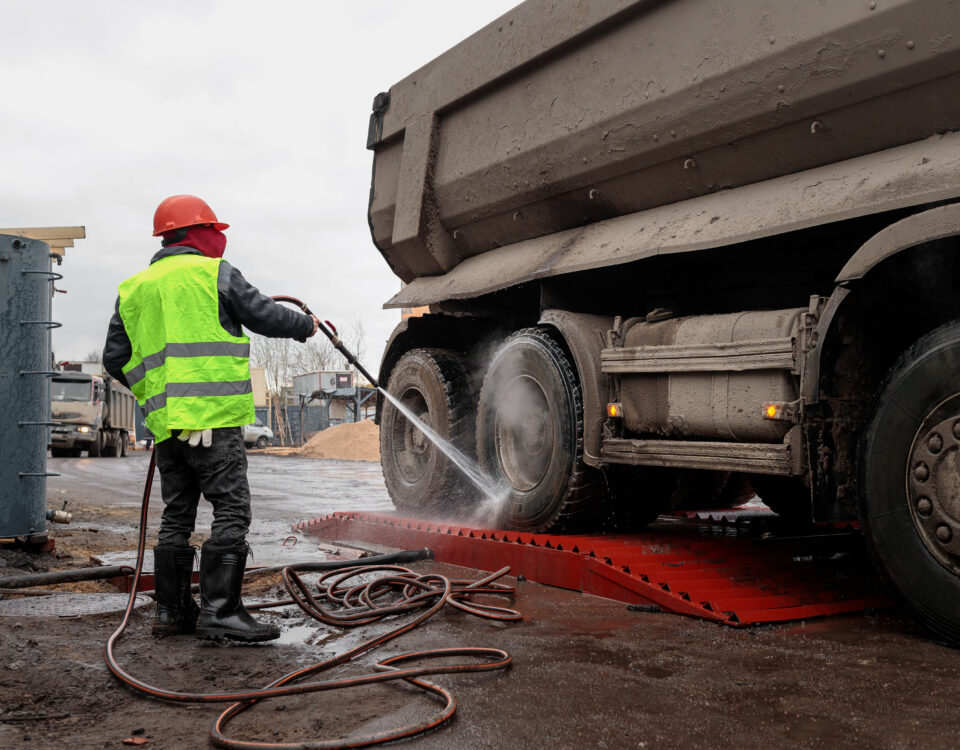
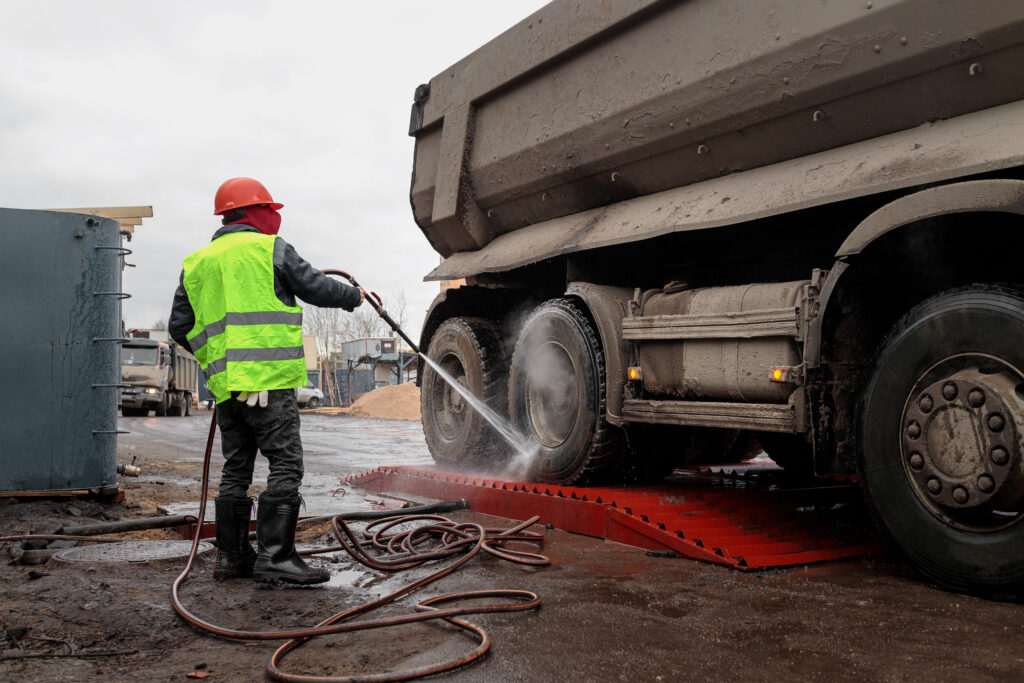
An industrial wheel wash uses high-volume water delivered through strategically positioned nozzles. As a truck moves across the platform, the system cleans its tires, wheel wells, and undercarriage.
Neptune’s automated wheel wash systems can activate when sensors detect an approaching vehicle. This makes it possible to clean trucks consistently without assigning workers to manually wash every tire.
Different platform lengths are available to provide one or more tire revolutions, depending on the material being removed.
Can Wheel Washing Help With Foreign Object Debris Control?
Foreign object debris, commonly called FOD, is any misplaced object that could damage aircraft or airport equipment. Construction materials, loose stone, and debris carried by vehicles can become part of this broader concern if they reach operational areas.
The FAA provides specific guidance for developing an airport FOD management program. A wheel wash does not replace inspections, sweeping, controlled access, or other required procedures. However, it can support a larger FOD-control strategy by removing material from vehicle tires before trucks leave the work zone.
Where Should the Wheel Wash Be Installed?
The system should be positioned along the designated construction exit where required vehicles can pass through it. The location must provide enough room for approach ramps, drainage, water-recycling equipment, and safe vehicle queuing.
The cleaned vehicle should then travel across a stabilized surface so it does not immediately collect more mud. Airport planners should also consider security checkpoints, restricted zones, sightlines, and construction-phasing requirements.
The FAA’s guidance on operational safety during airport construction can help project teams understand the broader planning considerations involved in working around airport operations.
Can the Wash System Handle Different Construction Phases?
Yes. Airport projects may begin with heavy excavation and later shift to paving, utility work, or building construction. Soil conditions and vehicle volumes can change throughout that schedule.
Neptune’s system strengths and features include adjustable nozzles and configurations that may be installed temporarily, aboveground, or in permanent settings. A relocatable option may be useful when construction entrances change as work progresses.
How Is the Wash Water Managed?
Dirty water should be collected rather than allowed to flow across access roads or airport pavement. A recycling system can separate sediment and return recovered water to the wash platform.
Operators should inspect the tank, pumps, nozzles, ramps, and drainage areas regularly. Removing accumulated solids helps preserve cleaning performance and reduces the possibility of system interruptions.
How Can Innovative Equipment Solutions Help?
Innovative Equipment Solutions can evaluate equipment size, soil type, project duration, vehicle volume, site security, and installation space before recommending a wheel wash configuration.
A properly planned industrial wheel wash can help an airport construction project reduce track-out, simplify roadway cleanup, and support its overall debris-management program. By stopping mud and loose material at the construction exit, contractors can maintain a cleaner boundary between active work and the airport’s operational environment.