Why Wheel Wash Placement Matters for Industrial Sites
June 23, 2026
How Can Industrial Wheel Wash Systems Operate Effectively in Cold Weather?
July 9, 2026
Why Do Quarries and Aggregate Operations Need Industrial Wheel Wash Systems?
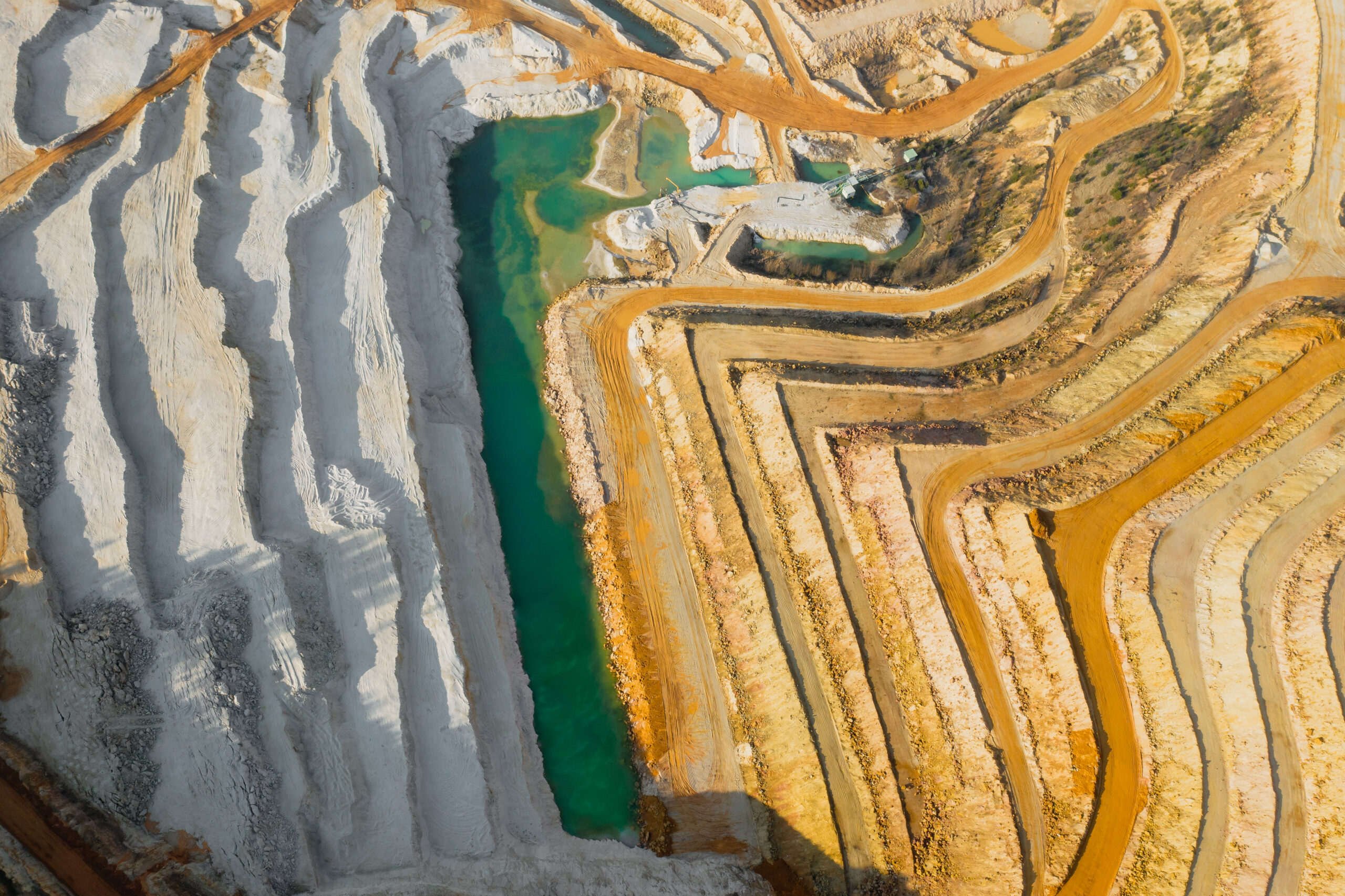
Quarries and aggregate facilities operate in some of the toughest conditions in the industrial sector. Haul trucks, loaders, and other heavy equipment regularly travel through areas covered with dust, stone, clay, and mud. Without an effective cleaning process, these materials can quickly be carried onto public roads.
Industrial wheel wash systems give operators a dependable way to control track-out, protect nearby roadways, and maintain a cleaner facility.
What Challenges Do Quarries Face with Vehicle Track-Out?
Vehicles leaving a quarry may carry substantial amounts of material in their tire treads, between dual wheels, and along their undercarriages. As trucks accelerate onto paved roads, that material can fall onto the driving surface.
Loose stone and mud may create hazards for motorists, while fine sediment can become airborne dust once it dries. Track-out can also enter storm drains during rainfall, carrying sediment into nearby waterways.
Cleaning trucks before they leave the property addresses the problem at its source.
How Does an Industrial Wheel Wash System Work?
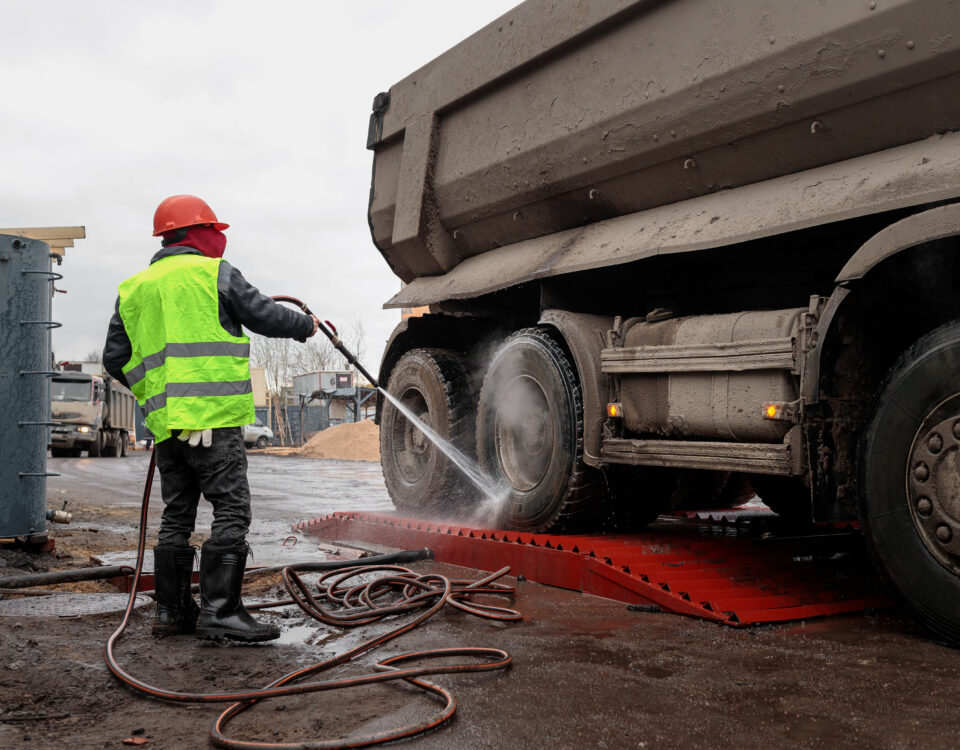
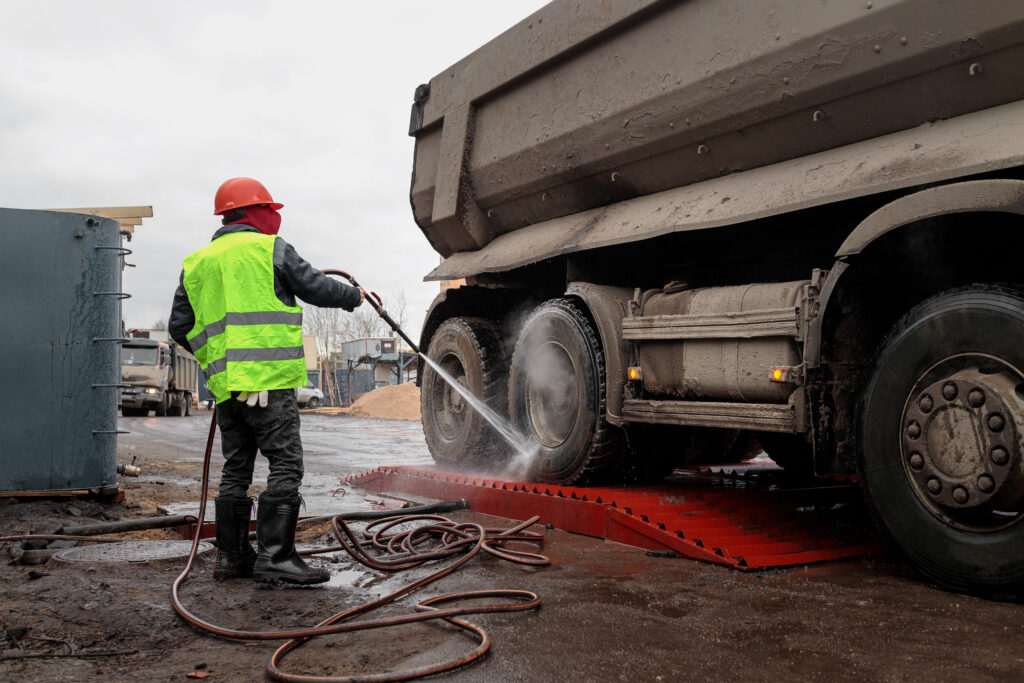
An industrial wheel wash directs high volumes of water toward the tires, wheel wells, and undercarriage of a moving vehicle. Strategically positioned nozzles loosen material while the rotation of the tires exposes different surfaces to the wash.
Neptune’s automated wheel wash systems are available with different platform lengths and configurations. This allows a system to provide the number of tire revolutions needed for the site’s soil conditions and cleaning requirements.
Automation also helps deliver a consistent wash for every vehicle without relying on employees to clean trucks manually.
Can Wheel Washing Improve Road Safety?
Yes. Keeping mud, rocks, and other quarry material off public roads helps create cleaner and more predictable driving conditions.
The Mine Safety and Health Administration explains that poor drainage, debris, excessive dust, and changing weather can contribute to dangerous haul road conditions. Although a wheel wash is only one part of a complete traffic-management program, it can help reduce the material transported between unpaved operating areas and paved surfaces.
Cleaner tires may also provide better traction as trucks move through the facility’s exit area.
Are Standard Wheel Washes Strong Enough for Quarry Equipment?
Quarries often use vehicles that are larger and heavier than conventional highway trucks. The selected wash platform must be wide, durable, and properly configured for the facility’s largest equipment.
Neptune offers wheel wash systems for heavy equipment that can accommodate large haul trucks and demanding materials such as heavy clay, tailings, fly ash, and overburden. Available undercarriage-washing features can also remove material from areas that conventional tire sprays may not reach.
The system should be sized according to vehicle dimensions, daily traffic volume, soil type, and the amount of material each truck carries.
How Is All the Dirty Wash Water Managed?
Modern industrial systems can capture wash water and direct it into a settling or separation tank. Solid material is removed from the water, and the recovered water can be returned to the wash platform for reuse.
A closed-loop process reduces the amount of fresh water required and keeps sediment within a controlled area. The EPA’s guidance on track-out controls recommends directing vehicle wash water into a sediment trap or similar treatment system rather than allowing it to leave the site.
Regular removal of accumulated solids helps the system continue operating efficiently.
What Should a Quarry Consider Before Selecting a System?
Operators should evaluate the size of their equipment, number of daily vehicle passes, available installation space, soil characteristics, water access, and long-term maintenance needs. A permanent quarry may require a different configuration than a temporary aggregate-processing site.
Innovative Equipment Solutions works with facilities to develop an industrial wheel wash system suited to their actual operating conditions. With the proper design, a wheel wash can reduce track-out, simplify cleanup, support environmental goals, and help a quarry maintain safer, cleaner roads for its employees and surrounding community.