
Behind the Innovation: How IES Wheel Wash Systems Keep Job Sites Safe and Compliant
November 10, 2025
The Modern Solution for Job Site Contamination: A Deep Dive into IES Wheel Wash Systems
November 24, 2025
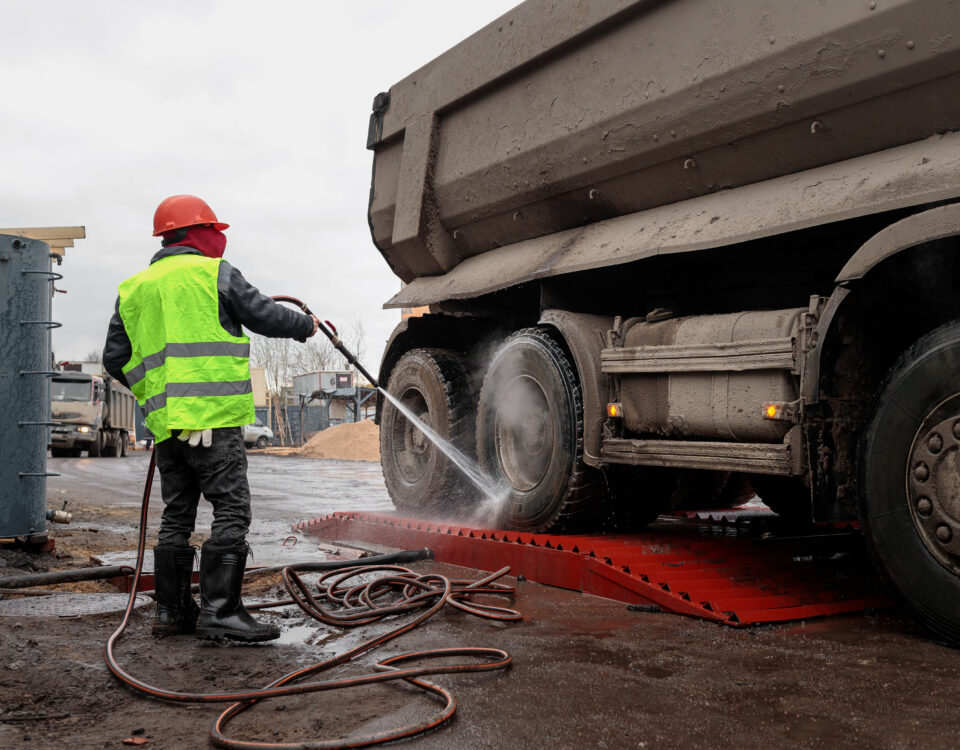
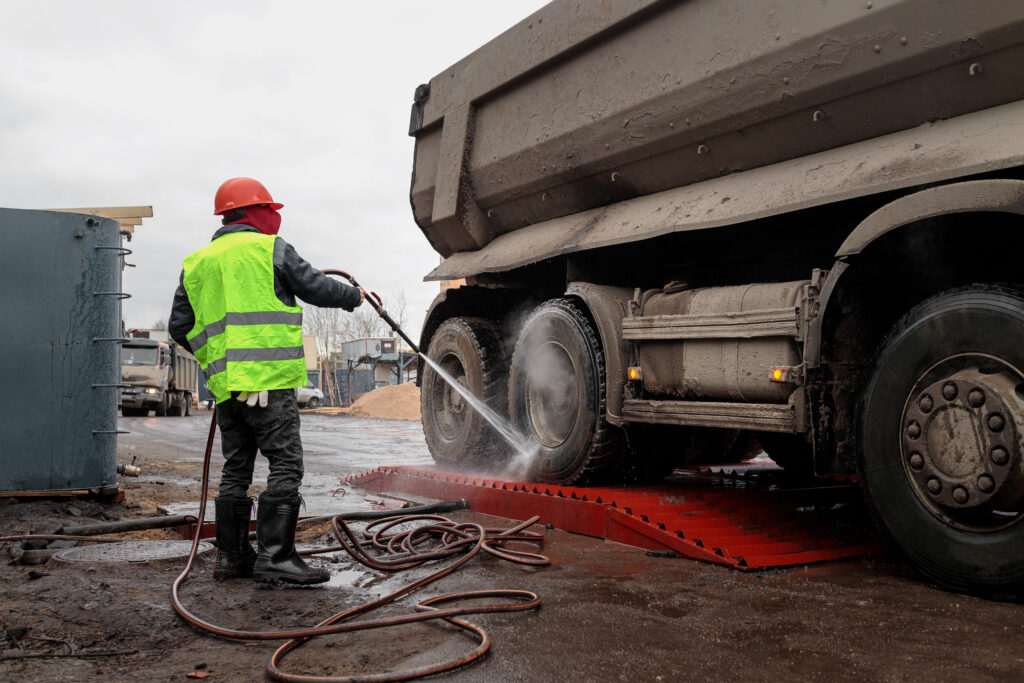
Track-out is one of the most common and costly issues on construction, mining, and industrial job sites. When trucks leave a site carrying mud, dirt, and debris on their tires and undercarriages, that material doesn’t stay contained for long. It ends up on public roads, sidewalks, and storm drains, creating safety hazards, environmental risks, and unwanted attention from inspectors and local communities. While many contractors attempt to manage track-out with manual cleaning or reactive street sweeping, these approaches often fall short. This is where IES/Neptune Wheel Wash technology provides a smarter, more reliable solution.
IES/Neptune Wheel Wash systems were designed to address track-out at its source. Developed by Innovative Equipment Solutions, Neptune systems are built by people who understand jobsite realities firsthand. Instead of relying on inconsistent labor or temporary fixes, Neptune offers automated wheel wash systems that deliver consistent, repeatable results every time a vehicle exits the site. By cleaning tires and undercarriages before trucks reach public roadways, these systems significantly reduce the amount of debris leaving the jobsite. An overview of available systems and configurations can be found at https://www.neptunewash.com/automated-wheel-wash-systems/.
One of the key benefits of IES/Neptune Wheel Wash technology is its impact on roadway safety. Mud and sediment tracked onto pavement can create slick conditions that increase the risk of accidents for motorists, cyclists, and pedestrians. Even small amounts of debris can reduce traction, especially during rain. By preventing track-out, Neptune systems help keep surrounding roads clean and safe, protecting both the public and the contractor from unnecessary risk and liability. Clean roads also reduce complaints from nearby residents and businesses, helping maintain positive relationships throughout the life of a project.
Beyond safety, track-out control is closely tied to regulatory compliance. Many construction projects operate under strict local, state, or federal regulations that require sediment and erosion control measures. Inspectors often view track-out as a visible sign of whether a site is being managed responsibly. Automated wheel wash systems demonstrate a proactive approach to compliance, showing that the contractor has taken concrete steps to prevent offsite contamination. This can help avoid fines, stop-work orders, and costly project delays. For broader regulatory context, the U.S. Environmental Protection Agency outlines construction stormwater and sediment control expectations at https://www.epa.gov/npdes.
IES/Neptune systems are also designed with environmental responsibility in mind. Sediment leaving a site doesn’t just create a mess on roads; it often ends up in storm drains, streams, and waterways, where it can cause long-term environmental damage. Neptune wheel wash systems help reduce this impact by removing material before it ever leaves the site. In addition, many Neptune systems feature closed-loop water recycling, capturing and reusing wash water instead of constantly drawing from fresh supplies. This reduces water consumption, minimizes runoff, and supports sustainability goals that are becoming increasingly important across the construction industry. More insight into these benefits is available on the Neptune Wash blog at https://www.neptunewash.com/blog/.
Operational efficiency is another major advantage of Neptune Wheel Wash technology. Manual wheel washing requires dedicated labor, ongoing supervision, and often disrupts traffic flow at busy site exits. Automated systems allow trucks to pass through quickly with minimal delay, keeping operations moving smoothly. Over time, this efficiency can lead to lower labor costs, reduced downtime, and fewer resources spent on cleanup or enforcement issues. Consistent automation also removes variability from the process, ensuring every vehicle is cleaned to the same standard regardless of time of day or staffing levels.
Flexibility is a defining feature of IES/Neptune systems. Job sites change over time, and Neptune offers solutions that can adapt to those changes. Whether a project requires a temporary, relocatable system during early earthwork phases or a permanent installation for long-term industrial operations, Neptune provides options to match different soil conditions, traffic volumes, and project durations. This adaptability ensures that track-out control remains effective from the first truck movement to final site cleanup.
Moving from track-out to clean roads is about more than meeting minimum requirements. It reflects a commitment to safety, professionalism, and environmental stewardship. IES/Neptune Wheel Wash technology offers a proven, practical way to achieve these goals while improving efficiency and protecting a project’s reputation. For contractors looking to take control of track-out and deliver cleaner, safer job sites, Neptune wheel wash systems provide a solution that works where it matters most.